Why Harold Halibut Boring Design Is Actually an Incredible Masterpiece
Explore why some players call Harold Halibut boring, and discover how its slow pacing and stop-motion style turn monotony into art.
When you first sit down with a narrative adventure that leans heavily into everyday mundanity, you might wonder if calling harold halibut boring is fair or just a symptom of modern gaming's need for constant adrenaline. This deeply crafted title matters because it challenges our relationship with time, pacing, and interaction, proving that deliberate slowness can evoke profound emotional resonance. If you have ever felt that calling a game harold halibut boring misses the bigger picture, you are not alone; beneath the slow-paced errands lies a stunning work of handcrafted art.
The Journey of Slow Bros: A Decade in Clay
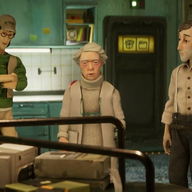
Developing a video game is rarely a fast process, but the team behind this project took their time to an entirely different level. Founded in Cologne, Germany, Slow Bros. spent over a decade crafting their vision from the ground up, starting way back in 2010. Instead of relying purely on digital assets, the creators utilized physical clay puppets and handmade miniature sets to establish a tangible, breathing microcosm aboard the sunken spaceship Feodora I.
Player experience reports and developer interviews highlight the immense physical labor required to bring this world to life. Every wall, prop, and character model underwent meticulous physical construction before transitioning into modern digital tools.
Translating Physical Craftsmanship into Digital Reality
Initially, the studio planned for a traditional stop-motion visual style. However, early tests revealed major obstacles with dynamic lighting and shadow consistency, making the characters look disconnected from their physical environments. To solve this, art director Olle Tillman and the team integrated photogrammetry, transforming physical models into 3D assets without losing their handmade texture.
According to community feedback and production retrospectives, this hybrid approach allowed the developers to capture the subtle imperfections of clay and paint. You can explore more about their development journey via Xbox Wire's Feature on Harold Halibut.
Embracing Everyday Frustrations and Monotony
It is easy to see why critics might label harold halibut boring when you examine the gameplay loop. You spend a significant amount of time managing mundane tasks, navigating bureaucratic mix-ups regarding transport tickets, and riding the painfully slow All Water Tube System. Every transit sequence echoes with the monotonous slogan "For All Water," mimicking the relentless tedium of real-world commuting.
Rather than offering instant gratification, the game deliberately mirrors the heavy fatigue of daily life. When Harold cleans up graffiti only to have control taken away before the final stroke is finished, it frustrates perfectionists—yet it powerfully synchronizes your emotional state with the protagonist's weariness.
Time, Countdowns, and the Art of Waiting
Time functions as both a mechanic and an emotional anchor throughout the narrative. Early in your adventure, a countdown toward the spaceship's long-awaited takeoff window gives you a clear sense of purpose. You count down the remaining 89 days, believing that freedom and an end to your daily boredom are just around the corner.
However, a devastating mid-game revelation shatters that hope: the station's administration has been secretly shortening the length of days by minutes over the years to conserve energy. Suddenly, your escape timeline stretches out by over 400 days. This narrative twist brilliantly utilizes pacing to induce genuine despair, making those rare moments of beauty stand out all the more starkly.
Becoming Harold: Emotional Interactivity
You do not just control Harold Halibut; over time, you effectively become him. As an uncharismatic laboratory assistant with a slouching gait and wide, startled eyes, Harold starts off as an ordinary person trapped in an extraordinary setting. He is neither a fearless warrior nor a charismatic leader; he is simply kind, benevolent, and deeply tired of his routine.
When Harold accidentally discovers an unconscious alien creature resembling a human-fish hybrid named Weeoò, the entire dynamic shifts. Their gentle, cautious first contact breaks the typical sci-fi invasion cliché, offering a heartwarming core that anchors the entire experience.
Conclusion
Ultimately, the argument that harold halibut boring design hurts the experience misses the profound synergy between narrative and pacing. By making you feel every ounce of Harold's exhaustion, Slow Bros. achieves a rare level of ludic empathy that fast-paced games can rarely replicate. It is a slow, demanding, and uncompromising masterpiece of tactile video game design.
Frequently Asked Questions
Is Harold Halibut boring to play?
While many players note that calling harold halibut boring is valid due to its slow pacing and repetitive errands, this deliberate design mirrors the protagonist's weary daily routine to create deep emotional immersion.
How long does it take to beat Harold Halibut?
Most player experience reports indicate that completing the narrative-focused journey takes roughly 12 to 15 hours, depending on how thoroughly you explore the handcrafted underwater environments.
What engine or technique was used to create the game?
The developers used a unique combination of physical clay modeling, miniature set construction, photogrammetry scanning, and motion capture to achieve its distinctive stop-motion aesthetic.
Can you skip dialogue or transit sequences?
No, transit systems like the All Water Tube System and extended dialogue trees are integral to establishing the game's pacing and themes of monotony and time.
Related Guides
Harold Halibut Age Rating Explained: Is This Wholesome Game Right for Your Family?
Discover the harold halibut age rating, content suitability, and player experiences to see if this stop-motion narrative adventure is appropriate for kids.
Harold Halibut Is It Good? An In-Depth Look at the Narrative Adventure
Wondering if Harold Halibut is it good? Discover player experiences, gameplay breakdowns, visuals, and whether this unique narrative adventure is worth your time.
Harold Halibut Metacritic Breakdown: A Deep Dive Into the Scores
Explore the harold halibut metacritic scores, player reception, and community reviews for Slow Bros.' unique stop-motion narrative adventure.
Harold Halibut Review: A Stunning Handmade Adventure Worth Exploring
Read our in-depth harold halibut review to discover how Slow Bros. crafted a unique handmade stop-motion style adventure game set underwater.